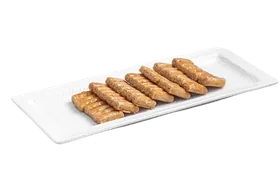
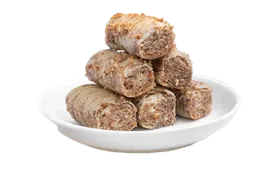
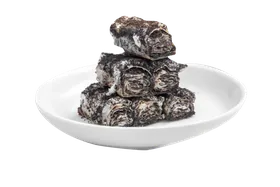
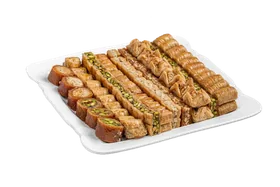
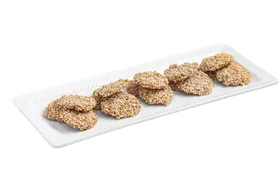
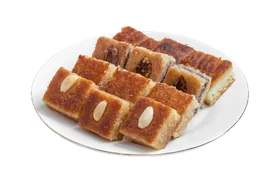
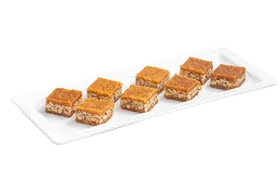
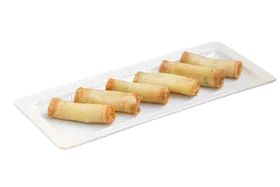
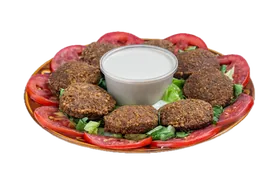
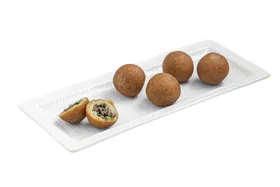
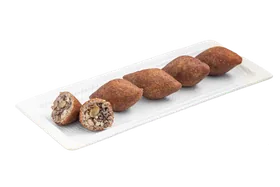
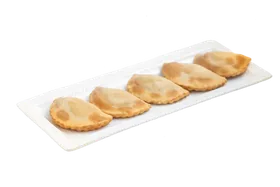
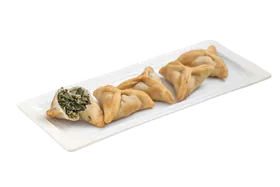
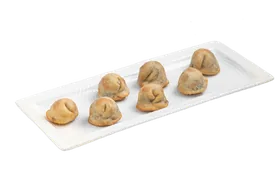
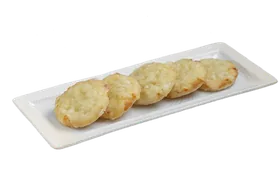
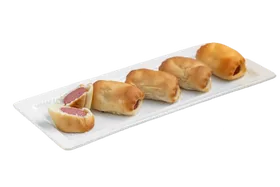
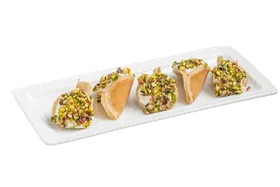
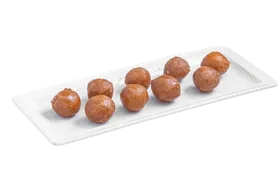
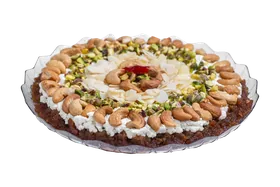
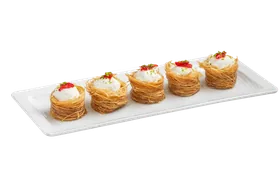
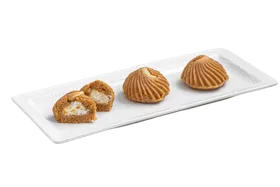
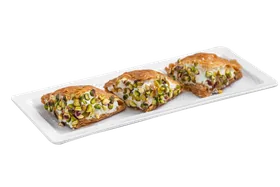
Arabic sweets exported from Dubai to distributors worldwide.
Eight markets with a page of their own, and the rest quoted case by case. What decides a lane here is the cold chain, not the distance.
La Patissiere exports Arabic sweets, Lebanese mezze, frozen
pastry and ready-to-bake bakery lines from its factory in Dubai, UAE, to
distributors and importers across the GCC, the wider Middle East and
Africa.
The range runs to 116 products across four storage states; frozen and
ambient lines travel furthest, and chilled lines are quoted only where
the receiving cold chain is confirmed. Production in Dubai and Muscat
sits inside the GCC customs territory. Specification sheets, food-safety
certification, certificates of origin and health or Halal documentation
are supplied with the consignment; incoterms are agreed per order.
What travels
The range, sorted by what a lane can carry.
Export viability is not a matter of preference, it is shelf life. These
figures come from our own production data, and the third lane is the one
worth reading twice.
Travels furthest
Ambient
26 products12 Months shelf life
No cold chain at all, and a year of shelf life. Nothing about distance or transit time constrains this lane, which is why it is the part of the range a new distributor almost always starts with.
All 26 ambient lines
Asabeh Cashew
Asabeh Lotus
Asabeh Oreo
Assorted Baklawa
Aysh El Bulbul Almond
Aysh El Bulbul Cashew
Aysh El Bulbul Pistachio
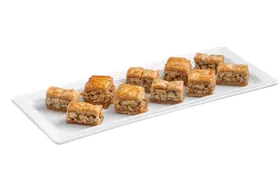
Baklawa Cashew
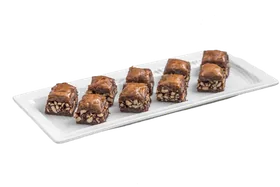
Baklawa Chocolate
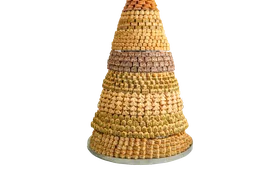
Baklawa Tower
Barazek Pistachio
Basbousa Almond
Basma Cashew
Bokaj Cashew
Borma Cashew
Borma Pistachio
Ghraybeh Pistachio
Kol W Shkor Pistachio
Maamoul Date Round Small
Maamoul Mad Pistachio
Maamoul Mad Walnuts
Moroccan Sweets Mix
Namoura Mixed Nuts
Sfouf With Almond
Tunisian Sweets Mix
Turkish Asabeh Pistachio
Travels with a reefer
Frozen
7 products12 Months shelf life
A year, the same as ambient — so time is never the binding constraint here either. The reefer container and the receiving cold chain are. Where that chain is proven, this lane behaves exactly like ambient.
All 7 frozen lines
Cheese Springroll
Falafel Frozen
Kibbeh Potato Meat
Meat Kibbeh Premium
Sambousek Cheese
Sambousek Spinach
Shish Barak
Exports to a chilled lane
Ready to bake
2 products30 Days shelf life
Half-baked and held at 0-5 degrees, finished in your own oven. Thirty days is a real export window, but it is a CHILLED window: it travels where the receiving chain is proven and the lane is short enough that the thirty days is spent selling rather than shipping.
All 2 ready to bake lines
Mini Manakish Cheese
Sausage Roll
Does not export
Chilled
40 products3 Days shelf life
Three days is a domestic and near-regional window. We will quote it into the GCC by road where the lane is short and the receiving chain is confirmed, and we will tell you when it does not work rather than ship it and hope.
All 40 chilled lines
Assafiri
Awamat
Aysh Al Saraya
Aysh El Bulbul Kachta
Baked Fatayer Cheese
Baked Fatayer Spinach
Baklawa Kachta
Balah Al Sham
Bamia Bil Ziet
Brown Madlouka with Cashew
Chaayebeyat / Warbat Ashta
Chaayebeyat / Warbat Pistachio
Fatayer Cheese & Black Sesame
Fatayer Chicken
Green Mafrouka with Pistachio
Halawat Al Jeben
Kaak Bread
Katayef Kachta
Katayef Walnuts
Kellaj
Konafa Fine Cheese
Konafa Fine Cheese 150G
Kunafa Nabulsiya Cheese
Kunafa Turkish
Lobia Bil Ziet
Manakish Mohamrah
Mini Cheese & Sujuk Manakish
Mini Manakish Zaatar
Mini Pide Cheese & Parsley
Mini Pide Meat
Mini Pide Zaatar
Mixed Baked Platter
Mixed Fried Platter (Mojanat)
Mouchabak
Osmaliya Ashta
Pizza Roll
Safiha Turkish Cheese
Safiha Turkish Mohamarah
Safiha Turkish Tomato & Onion
Znoud El Set
Shelf life, drawn to scale
Ambient12 Months
Frozen12 Months
Ready to bake30 Days
Chilled3 Days
A year against three days is a hundredfold difference, and it is the whole of the export question. Ambient and frozen both carry a year, so neither is limited by time — only by whether the lane needs a reefer. Ready to bake sits between the two: thirty days is a real export window, but a chilled one. Nothing here is a styling choice — the chilled bar is short because chilled is short.
40 further products are quoted on request. Their storage state and shelf life are confirmed per order rather than published, and nothing ships into a lane it cannot survive.
Markets with their own page
Eight markets, and what it actually takes to land there.
Each of these carries its own route, the authority that registers food
imports, and which part of the range survives the lane. If your market is
not listed, it is quoted the same way — ask.
Four things stand between an enquiry and a first container.
Two of them are ours, one is yours, and the fourth is agreed together.
The one that delays first shipments is almost always the third.
01
Specification sheets
Pack format, shelf life, ingredients, allergens and the storage state for every line you are taking. These are what your registration file and your own customers both need, and they go out with the quotation.
02
Food-safety certification
ISO 22000 and HACCP for the production site, and Halal for the certified product scope. Issued to you on request rather than published, because a certificate against a named site and a named scope is what a procurement file needs — a badge on a website is not.
03
Your market registration
Most destinations register the product, the importer or both before the first consignment clears. That filing is yours to make; the documents it needs are ours to supply. Start it at enquiry stage, not after the order is agreed — it is the step that most often delays a first shipment.
04
Shipping documents and incoterms
Commercial invoice, packing list, certificate of origin and the health or Halal documentation your destination requires. Incoterms are agreed per order rather than fixed, because the right term depends on whether you are consolidating with other suppliers.
Import requirements change. The authority and the route named on this page are a starting point for the conversation, not a compliance opinion. Confirm current requirements with your clearing agent, and ask us for whatever documentation the filing turns out to need.
Export questions
What importers ask before the first enquiry.
Which countries do you export to?
We quote and ship on enquiry across the GCC — the United Arab Emirates, Saudi Arabia, Oman, Qatar, Kuwait and Bahrain — the wider Middle East, and Africa, with other destinations quoted case by case. Production in Dubai and Muscat sits inside the GCC customs territory, which makes the Gulf the shortest lane we run.
The practical limit on any destination is the cold chain the storage state needs, not the distance. Frozen and ambient lines travel furthest; chilled lines need the receiving chain confirmed before we quote them.
What incoterms do you work on?
Agreed per order rather than fixed. The right term depends on whether you are consolidating our consignment with other suppliers, and on who is better placed to clear at your end. Tell us how you normally buy and we will quote on that basis.
Do you handle export documentation?
We supply the documents that come from the manufacturer: specification sheets per line, ingredient and allergen declarations, food-safety certification, commercial invoice, packing list and certificate of origin, plus the health or Halal documentation your destination requires.
Registering the product or the importer in your market is your filing to make. We supply everything it needs.
Which products travel best on a long lane?
Frozen and ambient. The frozen range — sambousek, spring rolls, kibbeh, vine leaves and falafel — carries twelve months, and is the simplest to plan around. Ambient sweets such as baklawa, maamoul, ghuraiba and barazek need no cold chain at all.
Ready-to-bake lines suit food service at distance because the product is baked at your end and reaches the guest fresh. Chilled lines are the constrained part of the range and we will tell you straight when a lane will not carry them.
Can we distribute under our own brand?
Yes. Private label runs on the same certified line and ships on the same lanes, with specification sheets issued in your name so you can answer your own customers. See private label.
How long does a first shipment take to arrange?
The production and documentation side moves at the speed of the quotation. The step that sets the real timeline is registration in your market, which most destinations require before a first consignment clears and which is outside our control. Start it at enquiry stage rather than after the order is agreed.
Tell us what you need and we will quote it.
Case size, minimum order and trade pricing are quoted against your
range and volume rather than published, because they differ by
storage state and destination. Send the list and we will come back
with specification sheets, the same business day.